One of the most important paradigm shifts in neuroscience over the past 30 years is the recognition that sleep is not a passive state of dormancy -- it is an active, precisely organized biological process that performs critical maintenance functions in the brain that are impossible or severely limited during wakefulness. Understanding what happens in your brain during sleep explains why sleep deprivation is not merely unpleasant, but genuinely damaging.
The Brain Is Never "Off" During Sleep
The most fundamental misconception about sleep is that the brain simply turns off. EEG (electroencephalography) recordings tell a completely different story. During REM sleep, brain electrical activity is nearly identical to active wakefulness -- in fact, early sleep researchers mistakenly classified REM as waking states until the distinctive eye movements and muscle atonia were noticed. Even during the deepest NREM slow-wave sleep, the brain is producing coordinated waves of electrical activity (the slow oscillations) that are actively driving memory consolidation processes.
What changes during sleep is the pattern of brain activity, not its presence. Different circuits become dominant; different neurochemicals become active; different physiological processes become possible. The brain during sleep is performing a carefully scheduled maintenance program that its waking operational demands simply do not allow.
The Glymphatic System -- Cleaning the Brain
One of the most significant neuroscience discoveries of the 21st century came from Dr. Maiken Nedergaard at the University of Rochester in 2013: the discovery of the brain's dedicated waste clearance system, now called the glymphatic system.
Unlike the rest of the body, the brain lacks a conventional lymphatic drainage system. Instead, it uses a network of channels that run alongside blood vessels (the perivascular space) through which cerebrospinal fluid (CSF) flows. During sleep -- particularly during deep N3 slow-wave sleep -- the brain's interstitial space expands by approximately 60%, allowing CSF to flow much more freely through these channels. This flow flushes metabolic waste products out of the brain tissue and into the blood, where they are cleared through the body's conventional waste systems.
The glymphatic system is approximately 10x more active during sleep than during wakefulness. The metabolic waste products cleared include:
- Beta-amyloid: The protein that aggregates into plaques in Alzheimer's disease. Even a single night of sleep deprivation measurably increases beta-amyloid burden in the human brain.
- Tau: The protein that forms neurofibrillary tangles in Alzheimer's and other tauopathies. Accumulated tau is associated with cognitive decline.
- Metabolic byproducts: General metabolic waste from the intense energy use of neuronal activity during wakefulness.
The implication is significant: chronic sleep restriction reduces glymphatic clearance, allowing these proteins to accumulate at accelerated rates. This provides a direct mechanistic link between chronic sleep loss and elevated Alzheimer's disease risk -- not merely an association, but a plausible causal pathway.
Memory Consolidation -- The Hippocampal Replay
During the day, new experiences and learned information are temporarily stored in the hippocampus -- a seahorse-shaped structure in the medial temporal lobe that serves as the brain's primary staging area for new declarative memories. The hippocampus has limited storage capacity and cannot serve as permanent memory storage.
During slow-wave sleep, the hippocampus "replays" the day's experiences -- the distinctive sharp-wave ripple complex (a burst of neural activity clearly visible on EEG) represents this replay process. Simultaneously, the slow oscillations of the cortex create temporal windows that synchronize with the hippocampal replay, allowing the memory traces to be transferred and integrated into neocortical networks where they will be stored long-term.
This memory transfer process is specific to slow-wave sleep and cannot be replicated during wakefulness or REM sleep. This is why the quantity and quality of N3 sleep directly predicts declarative memory retention the following day. Use our Learning Retention Calculator to see how your current sleep affects your memory consolidation.

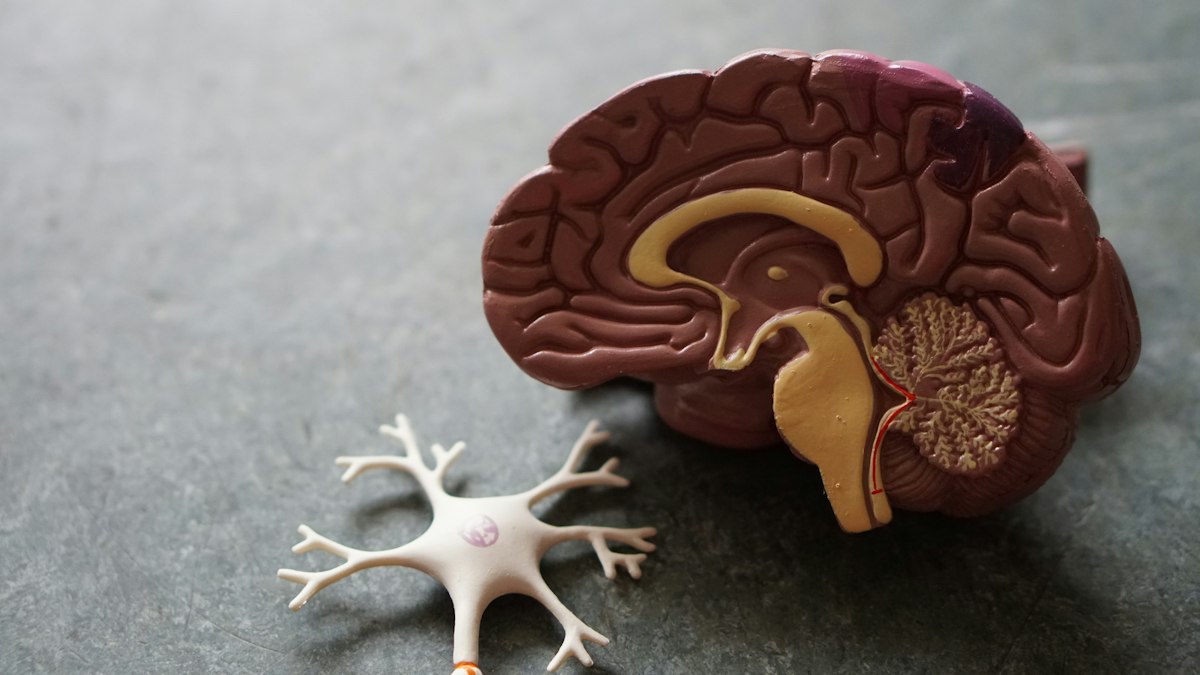
The slow oscillations of deep sleep are not random -- they are the coordinated signals that drive memory transfer from hippocampus to neocortex. Photo: Unsplash
REM Sleep -- The Brain's Creative Workshop
REM sleep presents one of the most paradoxical states in neuroscience: the brain is as electrically active as during alert wakefulness, yet the body is paralyzed (atonia) and effectively disconnected from the environment. This unique state enables functions that neither waking nor NREM sleep can perform:
Emotional memory processing
The neurochemical environment of REM sleep is distinctively different from both waking and NREM states. During REM, acetylcholine dominates while norepinephrine -- the brain's primary stress and arousal chemical -- is essentially absent. This is the only brain state with essentially zero norepinephrine activity. This neurochemical absence is believed to be what allows emotional memories to be "replayed" during REM without triggering the physiological stress response (racing heart, cortisol elevation) that accompanies the same memory during waking.
Matthew Walker's "overnight therapy" hypothesis proposes that REM functions as a neurobiological therapy session -- reprocessing emotional memories in a low-stress neurochemical environment, preserving the informational content while reducing the emotional charge. This explains why traumatic events naturally feel less emotionally overwhelming with time and adequate sleep, and why PTSD -- which involves disrupted REM sleep -- impairs natural emotional processing.
Creative integration
During REM, the brain forms novel connections between distantly related concepts -- the neural basis of creative insight and associative thinking. The acetylcholine-dominated state enables diffuse, associative processing rather than the focused, sequential processing that dominates waking thought. Several documented scientific breakthroughs and creative achievements have been attributed to REM sleep, including Kekule's discovery of benzene's ring structure and Mendeleev's periodic table arrangement.
Procedural memory consolidation
Motor skills, musical technique, athletic movements, and language acquisition all show significant "offline improvement" after sleep, with the gains specifically tracking REM duration. Practice does not make perfect -- practice followed by REM sleep makes perfect. The REM-dependent consolidation of procedural memories appears to involve the motor cortex and cerebellum, which are highly active during REM.
Neurotransmitter Restoration
During waking, the intense use of neurotransmitter systems gradually depletes key signaling molecules. Sleep allows restoration:
- Serotonin: Serotonergic neurons in the raphe nuclei fire during waking, regulating mood and emotional stability. During NREM sleep, serotonin neurons reduce firing, allowing restoration. Chronic sleep deprivation contributes to serotonin depletion, which is one mechanism linking sleep loss to depression and mood dysregulation.
- Dopamine: The reward and motivation neurotransmitter. Sleep-deprived individuals show altered dopamine receptor binding in reward circuits, contributing to increased impulsivity and risk-taking behavior.
- Norepinephrine: As noted above, essentially absent during REM -- its restoration during REM's absence appears to enable emotional reprocessing and reduced stress reactivity.
Neuroplasticity and Brain Growth During Sleep
Sleep is not only restorative -- it is also a period of brain growth and reorganization:
Synaptic homeostasis
The synaptic homeostasis hypothesis (Tononi and Cirelli) proposes that sleep serves to downscale the total synaptic strength built up during waking learning. During waking, the brain constantly forms new synaptic connections in response to experience (long-term potentiation). Without a balancing mechanism, synaptic networks would become oversaturated and lose their ability to encode new information. Slow-wave sleep's downscaling process selectively strengthens the most important connections while pruning weaker ones, maintaining the brain's capacity for new learning.
Hippocampal neurogenesis
The hippocampus is one of the few brain regions that generates new neurons (neurogenesis) throughout adult life. Sleep deprivation significantly reduces hippocampal neurogenesis in animal models, while adequate sleep supports it. New hippocampal neurons are thought to contribute to memory capacity and emotional regulation -- providing another mechanism by which chronic sleep loss impairs both learning and mood.

Sleep is when the brain performs maintenance impossible during waking -- from waste clearance to memory consolidation. Photo: Unsplash