One of the most important and practical discoveries in sleep science over the last two decades is that sleep is not just passive recovery -- it is an active period of memory processing that determines what you remember and what you forget. The implications extend from everyday learning to professional skill development to academic performance to the treatment of trauma and emotional disorders.
The Memory Consolidation Process
Memory formation involves three sequential stages, each vulnerable to disruption:
Encoding -- forming the initial memory
Encoding is the initial acquisition of new information during waking experience. When you study, practice a skill, or have an experience, the hippocampus temporarily stores the representation. This hippocampal "buffer" has limited capacity -- it is not long-term storage, but rather a staging area where memories await consolidation.
Sleep deprivation impairs encoding. Research by Walker's lab at UC Berkeley showed that 36 hours of sleep deprivation reduced hippocampal response to new learning by approximately 40% on fMRI -- meaning sleep-deprived subjects were forming weaker initial memories from the start, independent of the consolidation step that follows.
Consolidation -- stabilizing during sleep
Consolidation is the offline processing that occurs primarily during sleep, transferring encoded information from fragile short-term hippocampal storage to stable long-term neocortical networks. This is not passive decay resistance -- it involves active hippocampal "replay," where the pattern of neural activity during learning is reproduced during slow-wave sleep, strengthening the synaptic connections that represent the memory.
The sharp-wave ripple complex in the hippocampus -- a distinctive EEG pattern occurring during slow-wave sleep -- is directly associated with memory replay. Research in rodents using optogenetics has confirmed that artificially disrupting sharp-wave ripples prevents memory consolidation even in otherwise normal sleep. In humans, higher slow-wave sleep spindle density correlates with better declarative memory performance the following day.
Reconsolidation -- updating memories
Each time a memory is retrieved, it briefly becomes malleable again before being re-stabilized -- a process called reconsolidation. This is relevant to both learning (retrieved memories can be updated and improved with new information) and to trauma treatment (trauma-related memories can be modified during this reconsolidation window, which is the basis for several trauma-focused therapies).
Different Memory Types -- Different Sleep Stages
The relationship between sleep stages and memory types is specific and well-characterized:
Declarative memory (facts and events) -- N3 slow-wave sleep
Declarative (explicit) memory -- the type you consciously recall: historical facts, vocabulary, studied material, personal events -- is consolidated primarily during N3 slow-wave sleep. This is why early-night sleep (when N3 is concentrated in the first two cycles) is the most important period for academic learning and factual retention. Research by Jan Born's group in Germany showed that participants who slept after learning word-pair associations showed 30-40% better recall than those who remained awake during the same time period, with the benefit directly correlated to N3 sleep duration.
Procedural memory (skills) -- REM sleep
Procedural (implicit) memory -- the type for motor skills, musical instrument technique, athletic movements, language acquisition -- is consolidated primarily during REM sleep. Skills that are practiced show significant "offline improvement" after sleep, with the gains specifically tracking REM duration. A study by Walker et al. showed that people who learned a finger-tapping motor sequence improved by 20% in speed and accuracy after a night of sleep, with the improvement concentrated in those with more REM sleep. This applies to all skill learning: musical scales, tennis serves, programming, typing.
Emotional memory -- REM sleep (differently)
REM sleep has a unique role in emotional memory: it processes emotional experiences, preserving the informational content while reducing the emotional charge. Matthew Walker's "overnight therapy" hypothesis proposes that the neurochemical environment of REM -- specifically the absence of norepinephrine (the stress neurochemical) -- allows emotional memories to be replayed and reprocessed without the physiological stress response. This is why traumatic events feel less emotionally overwhelming with time and adequate sleep, and why PTSD patients who have disrupted REM sleep struggle to naturally process trauma.

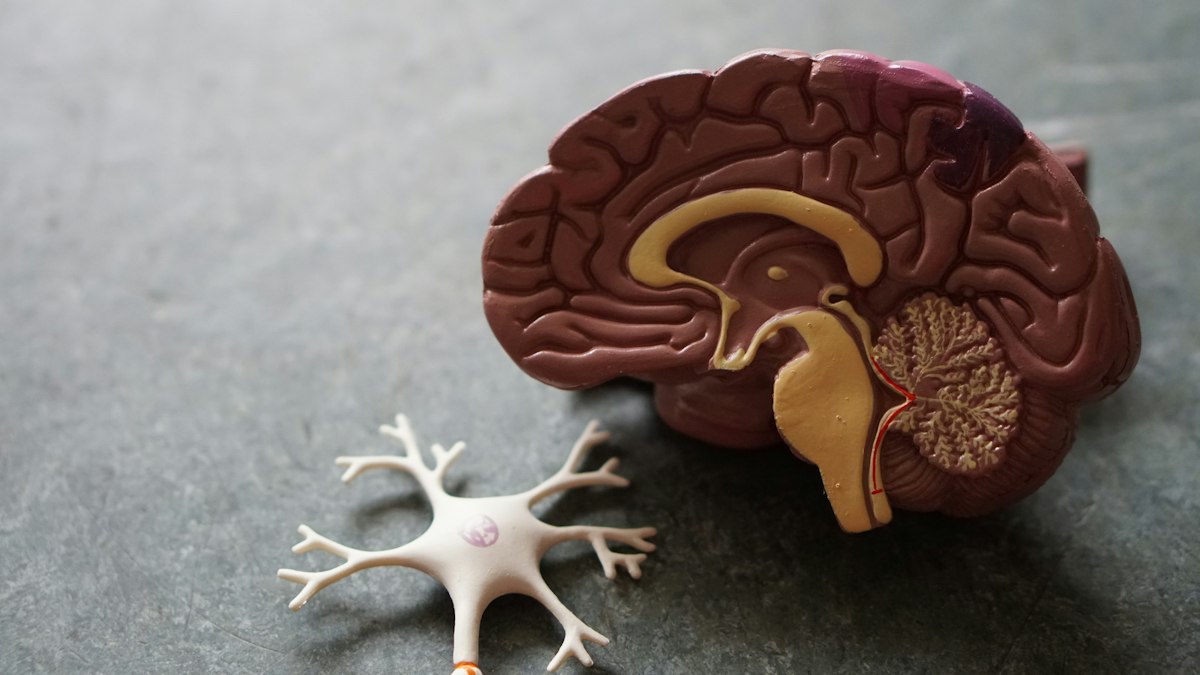
Study-then-sleep cycles exploit the consolidation process, with sleep converting studied material into long-term memory. Photo: Unsplash
Practical Implications for Learning
The study-sleep cycle
The most memory-efficient learning cycle: study material, then sleep. Sleep immediately after learning allows the hippocampus to replay the day's learning during slow-wave sleep, transferring it to more stable neocortical networks. Studying at 10 PM and sleeping by 11 PM is measurably more effective for long-term retention than studying the same material at 2 AM and sleeping at 3 AM (which provides less total sleep and cuts into later REM cycles).
Why all-nighters fail
All-nighters fail on two levels simultaneously: they eliminate the consolidation step for previously studied material (the studying from the previous day gets less consolidation with each hour of sleep lost), and they impair the cognitive function required to effectively encode new material during the all-nighter itself. Material studied at 3 AM by a severely sleep-deprived person is encoded weakly, then consolidated poorly in the following (short, disrupted) sleep. The cognitive cost is not limited to the exam day -- it compounds.
Napping for learning
Research by Sara Mednick at UC San Diego established that a 90-minute afternoon nap including both N3 and REM sleep produced as much learning improvement as a full night of sleep compared to continued wakefulness. Even a 20-minute nap improves alertness and working memory, indirectly supporting more effective encoding during subsequent study. The "learn-nap-learn" cycle (study, take a 90-minute nap, study more) is one of the most efficient learning protocols for high-stakes acquisition. Use our Nap Time Calculator to find the optimal nap window in your schedule.
Sleep, Memory, and Alzheimer's Disease
The long-term intersection of sleep and memory becomes most consequential in the context of dementia risk. The glymphatic system -- the brain's metabolic waste clearance mechanism -- is 10x more active during sleep than wakefulness. During slow-wave sleep, cerebrospinal fluid flushes beta-amyloid and tau proteins from the brain. These are the same proteins that accumulate as plaques and tangles in Alzheimer's disease.
Research by David Holtzman and colleagues at Washington University showed that even a single night of sleep deprivation increased beta-amyloid burden in the human brain the following day. Chronic sleep restriction -- consistently sleeping under 7 hours -- is associated with higher rates of Alzheimer's and dementia in large longitudinal studies, independent of other risk factors. Adequate sleep is one of the most modifiable risk factors for dementia identified to date.
Optimizing Sleep for Memory Consolidation
Specific actions that maximize the memory consolidation value of sleep:
- Get enough total sleep: Both N3 (early night) and REM (late night) are needed for comprehensive consolidation. Cutting sleep short disproportionately sacrifices REM.
- Avoid alcohol: Alcohol suppresses REM in the first half of the night, specifically impairing the procedural memory consolidation that occurs there. Even moderate drinking measurably impairs skill consolidation overnight.
- Review material before bed: The last material studied before sleep receives priority for hippocampal replay during the following slow-wave sleep. A brief 10-minute review of the most important material immediately before sleep is disproportionately effective.
- Nap after studying: A 20-90 minute nap after a study session consolidates the session's material and prepares the hippocampus for additional learning later in the day.
- Consistent sleep timing: Irregular sleep timing disrupts the predictable N3-REM cycling that underlies systematic memory consolidation.

Protecting early-night slow-wave sleep is the highest-leverage strategy for memory consolidation. Photo: Unsplash