Difficulty falling asleep is one of the most common sleep complaints. For most people it falls into one of two categories: occasional slow sleep onset from environmental factors or timing issues, and chronic difficulty falling asleep that reflects conditioned arousal or anxiety. The strategies that help depend on which category applies -- the right intervention for one can make the other worse.
This guide covers the fastest evidence-based techniques for falling asleep, what causes difficulty sleeping despite tiredness, and when the issue requires a more structured approach like CBT-I.
Why You Might Not Fall Asleep Quickly
Before covering techniques, understanding the mechanism behind slow sleep onset helps match the right intervention:
Physiological hyperarousal
The most common cause of slow sleep onset is physiological hyperarousal -- the nervous system is in an alerting state despite subjective tiredness. Common causes: residual cortisol from work stress or exercise too close to bedtime, caffeine still active in the system (half-life 5-7 hours -- a 2 PM coffee still has 25% caffeine active at midnight), blue light from screens delaying melatonin onset, a bedroom that is too warm (temperatures above 70F significantly delay sleep onset), and anxiety about not sleeping.
Conditioned arousal
If you have repeatedly lain awake in bed frustrated, the bed itself may have become a conditioned arousal stimulus -- meaning your nervous system activates simply by entering the bed and lying down. This is a learned association that operates below conscious awareness. People with conditioned arousal often find they fall asleep easily on the couch but not in their bed. The stimulus control component of CBT-I directly targets this. Use our CBT-I Calculator to assess whether you need structured treatment.
Circadian misalignment
Trying to sleep before your circadian clock is ready will reliably produce long sleep onset times regardless of how tired you feel. If you are a night owl trying to sleep at 10 PM but your circadian system signals wakefulness until midnight, no technique will reliably produce fast sleep onset -- the biology is working against you. The solution is either circadian shifting (light therapy, melatonin, consistent wake time) or schedule accommodation.
The Fastest Techniques for Falling Asleep
Technique 1 -- The Military Sleep Method
Reportedly developed for US military pilots who needed to sleep under stressful conditions, the military sleep method progresses through systematic relaxation:
- Relax every muscle in your face -- forehead, jaw, tongue. Let your mouth fall open slightly.
- Drop your shoulders as far as possible, then let each arm relax from shoulder to fingers.
- Exhale and relax your chest completely.
- Relax your legs from thighs to feet, letting them fall outward.
- For 10 seconds, hold one of these images: lying in a canoe on a calm lake under a blue sky; lying in a black velvet hammock in a dark room; repeating "don't think, don't think, don't think."
Practitioners report this technique produces sleep onset within 2 minutes after 6 weeks of practice. The initial success rate without practice is lower -- the technique requires learned physical relaxation skill.
Technique 2 -- 4-7-8 Breathing
Inhale through the nose for 4 counts, hold for 7 counts, exhale through the mouth for 8 counts. The extended exhale activates the parasympathetic nervous system through vagal stimulation, reducing heart rate and cortisol. The breath hold creates mild CO2 elevation with a calming effect on the nervous system. Most people notice measurable reduction in physiological tension within 2-3 repetitions. Use our Breathing Timer for guided practice.
Technique 3 -- Cognitive Shuffling
Developed by sleep scientist Luc Beaulieu-Prevost and popularized by sleep researcher Michelle Carr, cognitive shuffling disrupts the narrative thinking that keeps people awake. The process: think of a random word (e.g., "apple"), then visualize each letter -- a single random image beginning with that letter: A = astronaut, P = piano, P = penguin, L = lighthouse, E = elephant. Each image should be disconnected from the previous one -- the randomness is essential.
The technique works by mimicking the spontaneous, loosely connected imagery that naturally precedes sleep onset (hypnagogia), and by providing an engaging but non-stressful cognitive task that prevents rumination and anxious thought without being stimulating enough to maintain alertness.
Consistent application of sleep onset techniques combined with good sleep hygiene produces lasting improvement. Photo: Unsplash
Technique 4 -- Body Scan
Starting from the top of the head (or the feet, moving upward), direct attention to each body part in sequence, noticing any sensation without judgment -- warmth, pressure, tingling, weight. Move slowly and systematically. The body scan works by providing structured attentional redirection away from cognitive rumination while simultaneously promoting the physical relaxation that accompanies focused body awareness. Unlike PMR (which involves active tension and release), the body scan is purely observational -- making it easier to practice in bed without disturbing a partner.
Technique 5 -- Temperature Manipulation
Core body temperature drop is one of the biological triggers for sleep onset. A warm bath or shower (not scalding) 60-90 minutes before bed raises peripheral body temperature, which then produces a rebound core temperature drop as the body dissipates heat -- exactly the condition that promotes sleep onset. Research shows this reduces sleep onset time by an average of 10 minutes and increases slow-wave sleep duration.
Additionally, cooling the bedroom to 65-68F (18-20C) facilitates the core temperature drop required for sleep onset. Temperatures above 70F significantly delay onset and reduce deep sleep quality. This is one of the fastest and most reliable environmental changes for improving sleep onset.
Environmental Conditions for Fast Sleep Onset
Even the best technique is less effective in a suboptimal environment. The core conditions:
- Temperature: 65-68F (18-20C) -- cool but not cold. Use a fan for air movement even in already-cool rooms.
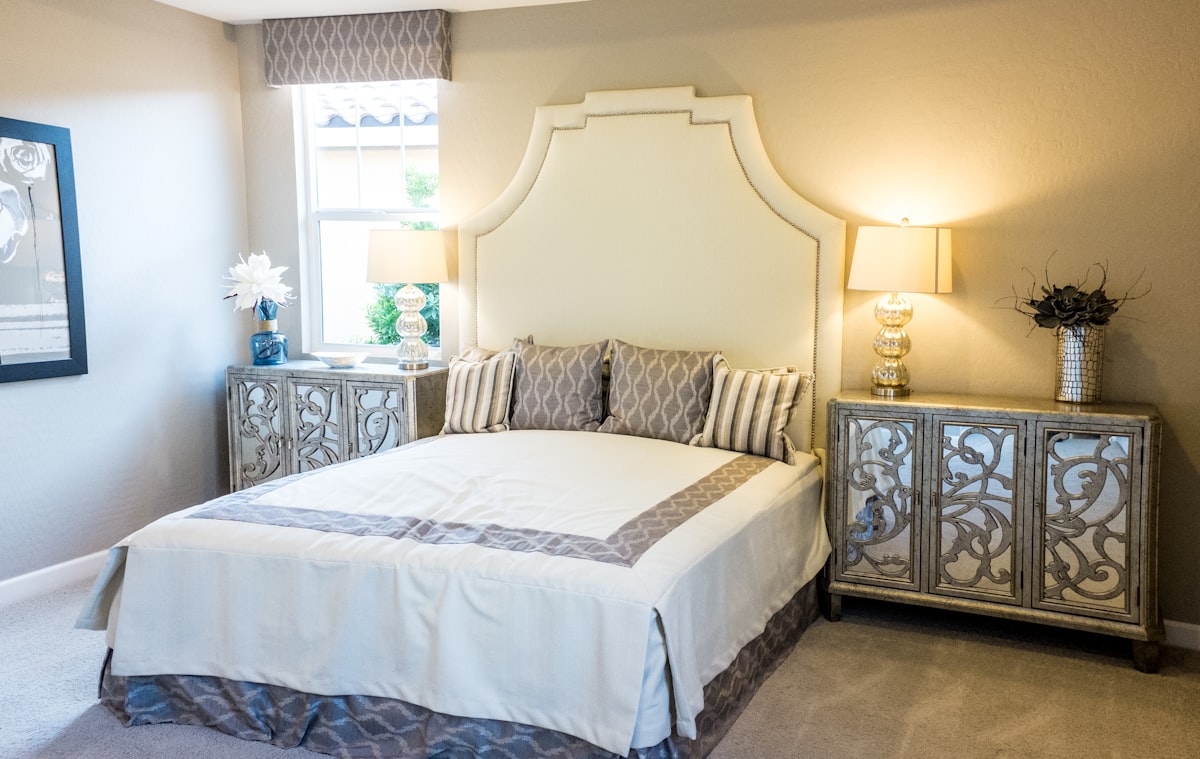
- Darkness: Complete darkness or near-complete -- even low-level light from electronics suppresses melatonin. A sleep mask costs under $15 and immediately eliminates light exposure.
- Noise: Consistent masking noise (white noise, pink noise, rain, fan) eliminates the contrast between quiet and sudden sounds that cause arousals. Silence in quiet environments works; silence in variable-noise environments (traffic, neighbors) does not.
- Screens off: At least 60 minutes before target bedtime. Blue light suppresses melatonin for 1-3 hours after exposure.
When Techniques Are Not Enough -- CBT-I
If difficulty falling asleep has been present for more than 3 months (more than 3 nights per week), techniques alone are unlikely to resolve it. Chronic onset insomnia almost always involves conditioned arousal and cognitive hyperarousal that require the structured behavioral approach of CBT-I. The components most relevant to sleep onset difficulty:
- Stimulus control: Removing wakefulness from the bedroom through consistent "out of bed if awake" practice
- Sleep restriction: Temporarily limiting time in bed to match actual sleep time, building sleep pressure that overcomes onset difficulty
- Cognitive restructuring: Challenging the catastrophic predictions about not sleeping that activate the stress response
- Paradoxical intention: Deliberately trying to stay awake with eyes open -- removes performance pressure, paradoxically reducing onset time
Consistent use of sleep onset techniques combined with environment optimization produces lasting improvement. Photo: Unsplash